Overview
Our impact
Balancing climate action & biodiversity restoration
Carbon is only part of what a restored forest gives back. By taking plantation forest that was destined for clear-cut logging and restoring it into permanent native forest, The Restore Project also rebuilds habitat, protects soils and waterways, and supports the rural communities around our forests.
Carbon revenue is what pays for this work, funding the long-term, active management that native restoration depends on.
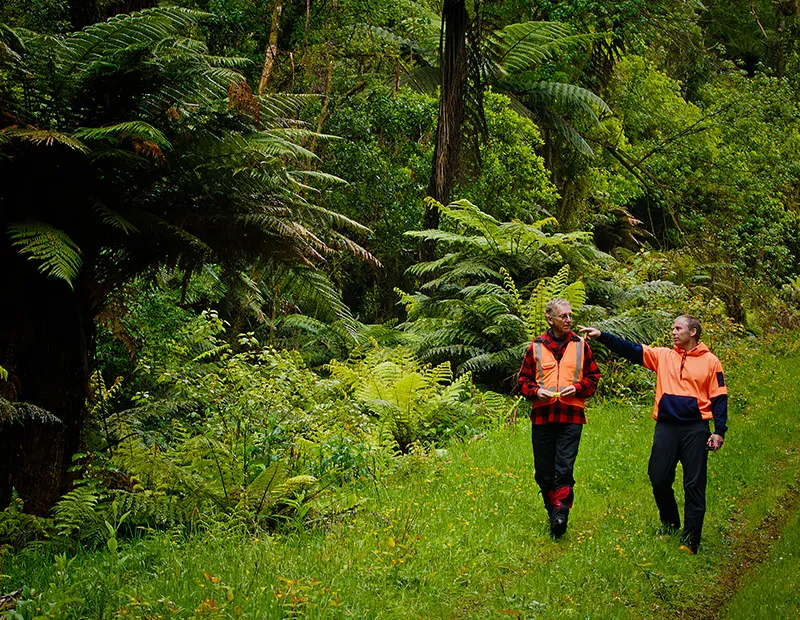
The key to this approach is the actively managed restoration of native forests. This will increase biodiversity, enhance environmental resilience and provide a broad range of community and other environmental benefits.
Biodiversity
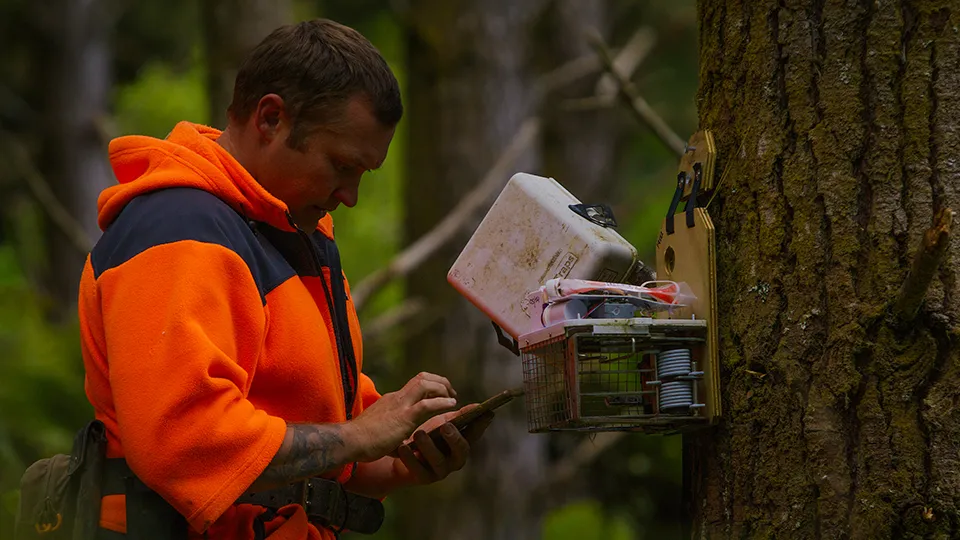
Shaun Gifford resetting an AT220 possum trap. Shaun also runs the Nateva Kiwi Avoidance Training sessions.
Before being extensively cleared for settlement and agriculture, New Zealand was largely covered in native forest. Our aim is to restore that native biodiversity, in areas most suited to permanent forests.
To enhance local biodiversity, and re-establish a healthy and balanced ecosystem, our approach includes:
- Selecting and protecting sites with remnants of native forest, to provide a natural seed source for the process of restoration.
- Targeted native enrichment planting, as required, to reintroduce a range of native species.
- Focusing on slower growing canopy species, which will eventually form an important part of the long-term structure of the restored forest.
- Protecting the growing trees from pest weeds and choking grasses, through long-term management and pioneer tree growth.
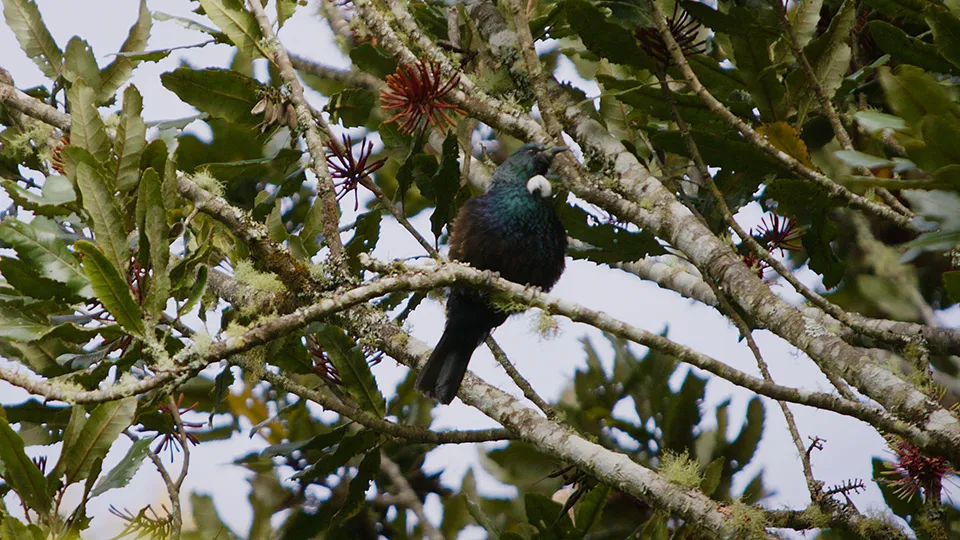
- Protecting native birds, which act as a vital engine of forest restoration by dispersing seeds from nearby native forest stands.
- Returning plantation forest to permanent native forest through natural succession, with the exotic nurse crop giving way to a native canopy.
- Managing light in the forest through Variable Density Thinning and lightwells, and establishing seed islands, so native species can take hold beneath the canopy.
- Removing the pest animals that hold native forest back. Our project manager, Nateva, invests more than $2 million a year in the largest private pest management operation in New Zealand.
- Trapping predators such as rats, stoats, weasels and hedgehogs, humanely and effectively, to protect native wildlife.
- Protecting the existing native forest within our project area under the same long-term conservation covenant.
- Working carefully in kiwi country, with kiwi-avoidance training for our field teams.
- Measuring what returns. Our bioacoustic monitoring pilot in Kaitieke Forest uses automated recognition of bird and bat calls to build a baseline of the native species present.
This active management approach is designed to mimic and accelerate natural restoration, especially where deforestation or grazing has previously removed native seeds from the site.
Water and soil
Our forests grow on steep, erosion-prone land, which is where permanent forest cover does the most good.
- Keeping permanent forest on steep hill country, where it helps hold soil in place and prevent erosion.
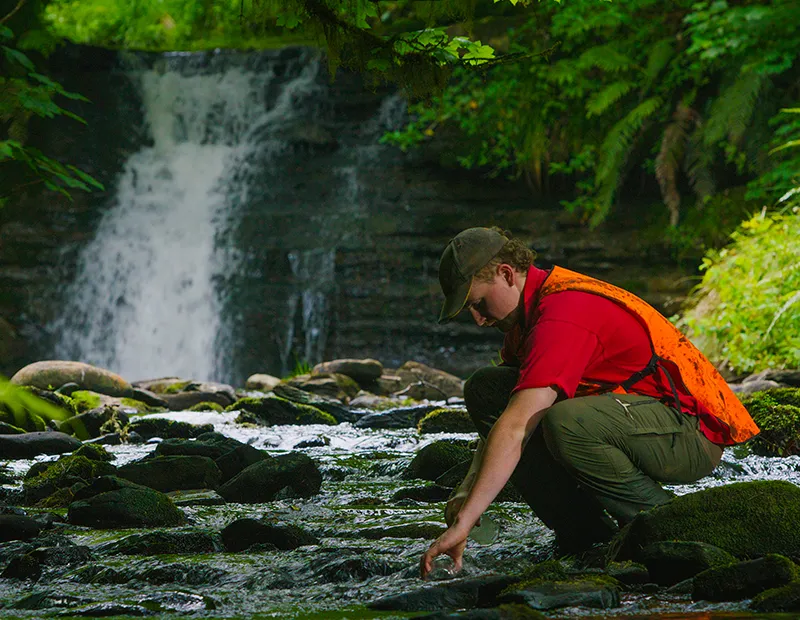
- Protecting riparian zones along the waterways that run through our forests.
- Building climate resilience into vulnerable catchments for generations to come.
Community
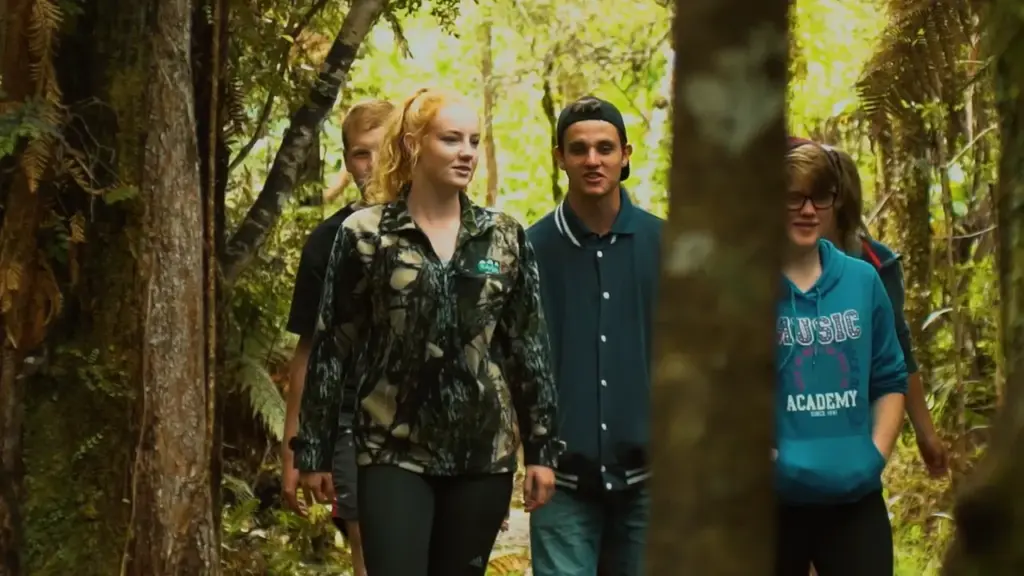
POET connects young people to the environment through high quality outdoor education programmes.
As well as contributing to the environment and New Zealand’s climate targets, our restoration programme also makes a significant contribution to rural communities.
- Bringing long-term climate investment into rural districts, and keeping it there through decades of active forest management.
- Stimulating local business, with the contractors, suppliers and services that restoration work relies on.
- Providing the opportunity to use low productivity land to grow trees to support climate action and improve their local environment.
- Supporting the charities working in our communities, including the Perry Outdoor Education Trust (POET) and the Waddell Foundation, through our association with Nateva.
Employment
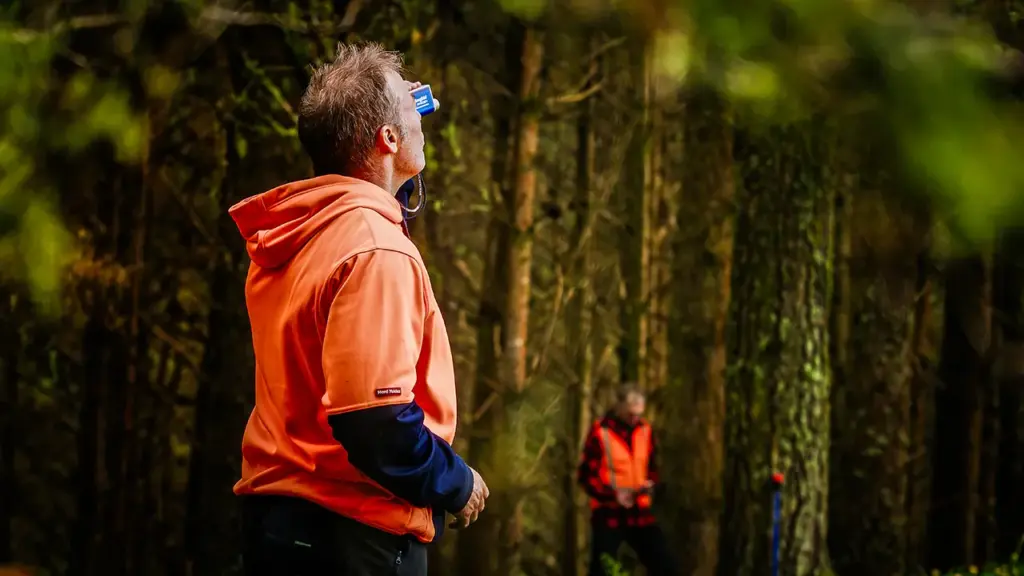
Native restoration is hands-on work that continues for decades, well beyond the planting and harvest cycle of a plantation forest.
- Bringing long-term climate investment into rural districts, and keeping it there through decades of active forest management.
- Stimulating local business, with the contractors, suppliers and services that restoration work relies on.
- Providing the opportunity to use low productivity land to grow trees to support climate action and improve their local environment.