A unique project to survey biodiversity in our forests by listening for the calls of native species has uncovered a habitat for one of Aotearoa New Zealand’s critically endangered species, the pekapeka-tou-roa, long-tailed bat.
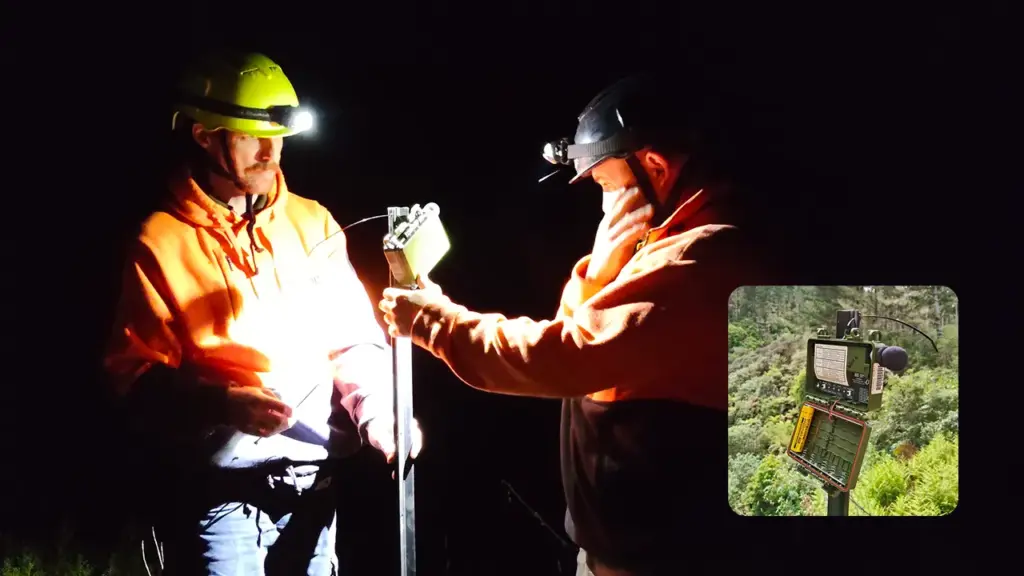
In late 2025, Nateva established a pilot programme in the Kaitieke Forest to trial the effectiveness of bioacoustics monitoring. Bioacoustics monitoring combines the use of specialised recording devices, coupled with AI-supported software analysis, to identify and survey the presence and diversity of birds and bats in the environment.
The recordings took place across 15 sites – each around 200 metres apart – in a 130 hectare area of the forest. The site was selected because it offered a variety of forest environments, including native forest, established pine, forest edge and riparian corridors. Recording took place at dawn and dusk, as well as for four hours into the night, to capture the calls of diurnal and nocturnal birds. The recorders were also able to monitor ultrasonic calls when detected during the evening.
Nateva Native Forest Advisor, Matt Upton, who ran the programme, says the bats were known to be in the general area, but finding them in the pilot survey was surprising.
“I wasn’t initially confident we’d find bats,” says Matt. “They are a rare and cryptic species, and even if you know they are in a particular area, they won’t necessarily be everywhere.”
“So finding them – and not in small numbers either – pretty much everywhere we set the recorders up, was quite a surprise.”
The long-tailed bat, and the larger, greater short-tailed bat, which are both vulnerable to predators like rats, stoats and possums, are the only two native land mammals endemic to New Zealand.
New technology improving monitoring
Matt says bioacoustics technology has really opened up the ability to monitor the bats.
“It’s very unlikely you’d ever directly observe a pekapeka,” Matt says. “They’d never been seen in this forest, though some of Nateva’s land managers have seen them through thermal scopes at night in our other forests.”
“By listening to the forest overnight and being able to record with ultrasonic microphones, which can capture the calls of the bats that are outside our hearing range, we were able to positively identify them in the Kaitieke Forest.”
To get a gauge of bat numbers, the recorder and the analysis software identifies a ‘pass’ or individual call with a start and end point. A total of 805 bat passes were recorded during the month-long project. The speed and accuracy of processing and analysing over 400 hours of recording data was greatly improved by the use of an AI model from Cornell University, as well as specialist software.
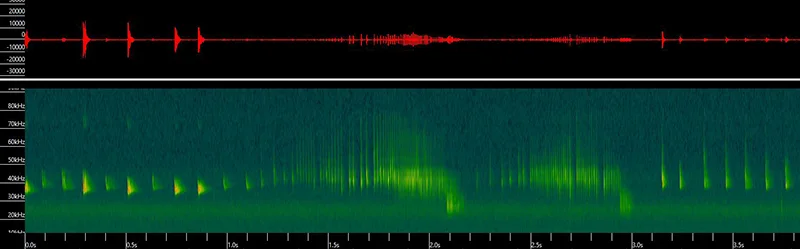
Listen to the sounds of the bats captured in the Kaitieke Forest (note: adjusted for human hearing)
Creating new habitats
One recording site proved especially popular with the bats, something which Matt and the team found particularly interesting.
“There was higher activity in the riparian corridor, which is what you’d expect for the species because they are known to prefer the forest-edge habitat for feeding,” says Matt. “They do travel quite a distance for feeding, but are known to roost within pine forests, which may be why we also detected them there.”
“However, probably the most interesting site – one of the most active areas we monitored – was in a space where we have created a gap in the pine and planted it in native, as part of our native seed island programme.”
“That’s one of our enrichment planting methods we’re looking to implement across our forests to support native regeneration. Given the amount of feeding activity there, the edge conditions created by the seed-island programme could potentially have the added benefit of establishing new bat foraging habitats.”
Locating endangered species
The bioacoustics trial programme also yielded positive results in the monitoring of birdlife, with 25 bird species, including 14 native, detected in the study area. Two of those native species, koekoeā or long-tailed cuckoo and toutouwai, the North Island Robin, have a threatened or at risk conservation status.
Matt says the project has now established a baseline of bird and bat diversity for Kaitieke Forest, including the presence of three species of conservation concern.
“Native forest supported higher densities of species reliant on native food resources and forest floor structure, such as North Island Robin and New Zealand Bellbird, while pine forest supported higher densities of several insectivorous and generalist species, most notably Whitehead,” Matt concluded in his study.
Ultimately, by listening to the forest, Nateva is helping to build a greater understanding of these rare and endangered species, and the environments which protect them.